How Multi-Unit Operators Can Reduce Time-to-Hire from Weeks to Hours Copy Copy Copy Copy Copy Copy Copy Copy Copy Copy Copy Copy Copy Copy Copy Copy Copy Copy Copy Copy
Hiring delays cost revenue in high-volume industries. See how instant engagement, automated scheduling, and streamlined onboarding reduce time-to-hire dramatically.

The Cost of Delayed Hiring
When a shift goes unfilled, operations suffer.
When interviews take a week to schedule, candidates disappear.
When onboarding paperwork drags, start dates move.
In high-volume industries, time-to-hire directly impacts revenue.
Yet many operators still rely on:
Manual screening
Email-based scheduling
Paper-based onboarding
Disconnected compliance tools
This creates friction at every step.
Step 1: Engage Instantly
The moment a candidate applies, engagement must begin.
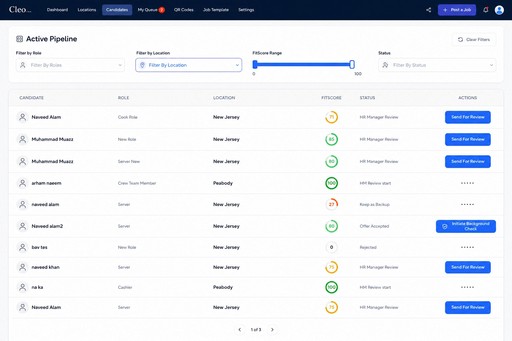
Conversational hiring increases completion rates and filters out ghost applicants before managers ever review profiles.
Fit Score™ ranking surfaces the strongest candidates immediately.
Instead of reviewing 200 applications, managers start with the top 10%.
Step 2: Automate the Middle
Once a candidate is selected, scheduling must happen immediately.
Automated interview coordination eliminates delays, reduces no-shows, and keeps candidates moving through the pipeline.
Speed increases acceptance.
Step 3: Automate Onboarding & Compliance
The final bottleneck is paperwork.
ID verification.
Background checks.
I-9 compliance.
E-Verify.
Offer letters.
When onboarding is automated, new hires become work-ready faster.
From Weeks to Hours
High-volume hiring doesn’t need more applications.
It needs less friction.
When engagement, ranking, scheduling, and compliance are unified in one system, hiring velocity changes completely.
That’s how multi-unit operators reduce time-to-hire from weeks to hours.
Recent posts